
A Performance Insight for Coaches
When you look at the athletes who excelled on Dancing With the Stars, a pattern appears right away. The standouts were not always the youngest or the strongest. They were the ones with exceptional coordination, timing, reaction speed, and rhythm. Names like Emmitt Smith, Apolo Ohno, Hines Ward, and Rashad Jennings all had one thing in common. They had elite body control that transferred directly into learning new movement skills quickly.
That same principle applies in every sport. Coordination is the hidden performance multiplier that separates athletes who keep improving from athletes who plateau.
What We See With College Athletes
We recently had 18- and 19-year-old college baseball pitchers go through HupSix training. Cardiovascularly, they performed very well, logging 50 and 54 cardio zone minutes in the 30-minute session. The surprising part was how much they struggled with coordination, reaction changes, and timing. Both were strong and conditioned, yet their mind-body connection was inconsistent when asked to react quickly to pattern changes.
This is not unusual in repetitive sports like baseball. Pitchers train highly specific movement patterns. They do very little multi-directional timing work or rhythm-based footwork. When exposed to a reactive system, the gaps become visible immediately.
The good news is that these gaps are trainable. They can be improved quickly. And when they improve, performance improves alongside them.
What Coordination Actually Does
Coaches often focus on strength, speed, conditioning, or mechanics. Those matter. But the athlete’s ability to coordinate timing, rhythm, and reactive movement is what determines how well they can use those physical tools in real time.
Improved coordination leads to:
• Faster motor learning
• Quicker reaction time
• More efficient movement
• Better decision making under pressure
• Greater movement variability with fewer errors
A growing body of research supports this. Studies in motor learning and neuromuscular control show that athletes with higher coordination adapt faster, retain skills longer, and make fewer mechanical errors during fatigue. (full references below)
Why This Matters for Coaches
Most performance ceilings begin with coordination, not strength. When athletes increase coordination, they move more efficiently, execute more consistently, and respond faster under pressure. They also make better use of conditioning because their neuromuscular system handles work more efficiently.
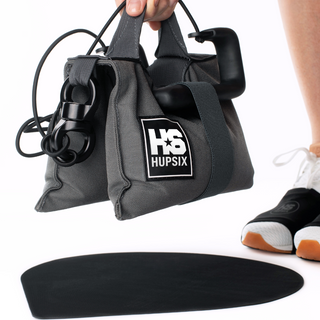
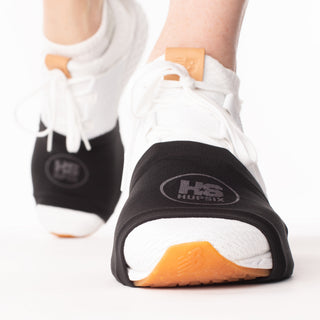
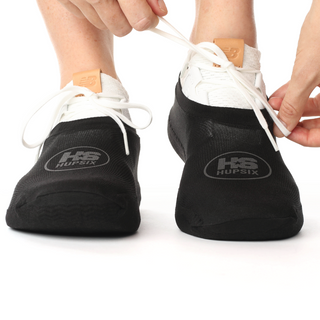
This is where HupSix fits naturally into sport training. It is not built to mimic sport-specific drills. It challenges the qualities that improve all sports.
• Reaction speed
• Timing
• Agility
• Motor control under fatigue
• Rhythm-based movement
• Movement quality under resistance
These qualities transfer directly to sport performance without creating redundancy or interfering with mechanics.
What You Can Measure and Track
If an athlete struggles with coordination early on, that is the diagnostic. If they improve over time, that is the performance indicator.
Coaches can track:
• Faster reaction responses during HupSix timing drills
• Reduced error rate in rhythm patterns
• Increased accuracy and stability in multi-directional steps
• Better control under moderate resistance
• Higher cardiovascular output with smoother movement
• Improved recovery between high-effort intervals
These changes mirror what we see in improved game performance: better footwork, more efficient mechanics, quicker decision making, and higher conditioning capacity.
Why This Helps Cardiovascular Development
HupSix uses guided interval rounds influenced by Dr. Kenneth Cooper’s findings on aerobic development and the Norwegian 4x4 approach. Each 30 minute session delivers moderate to vigorous work with clear effort and recovery phases. Vigorous minutes count double in terms of heart adaptation. This is why most athletes log 40 to 50 zone minutes per class on Garmin watches.
Athletes get both the cardiovascular benefits and the coordination benefits in one session. They do not get this combination from treadmills, bikes, or steady-state conditioning.
In Simple Terms for Coaches
If an athlete improves coordination, reaction time, and timing, they improve in their sport. If they can handle changing patterns, resist fatigue with clean mechanics, and move in sync with external cues, they will perform better, regardless of position or level.
That is what HupSix delivers. It exposes the gaps and then trains them in a way that is engaging, measurable, and directly useful in competition.
If you want to evaluate your team’s coordination and performance under pressure, contact us. We offer HupSix Clinics for high school, college, and professional teams.
----------------------------------------
Key research areas:
• Motor learning and skill acquisition (Schmidt and Lee, Motor Control and Learning)
• Neuromuscular coordination and performance efficiency (Behm and Sale, 1993)
• Rhythm and timing training effects on athletic performance (Snyder and Kivlin, 2015)
• Agility and reaction time research in field and court sports (Sheppard and Young, 2006)
• Interval training effects on reaction speed and movement economy (Cooper, 1968 and Norwegian 4x4 lineage)
These studies point toward the same conclusion. When you improve the athlete’s timing and coordination, you improve the athlete.