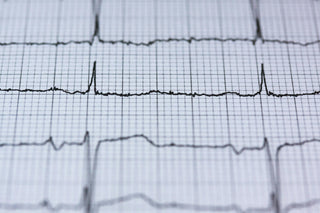
Heart rate variability is the moment-to-moment change in the spacing between your heartbeats, and you can train it by doing structured interval cardio that teaches your body to raise effort quickly and recover just as fast.
Heart rate variability sounds complicated, but the idea is simple: it’s the amount of time between your heartbeats. Not the number of beats per minute—the spacing between them. That tiny variation tells you how well your body handles effort, recovery, stress, and adaptation. Athletes track it. Cardiologists respect it. And if you improve it, you feel the difference in your energy, mood, and workouts.
But HRV is not a “stress score,” and it’s not something you fix with breathwork alone. You improve it the same way the body improves every major cardiovascular marker: by giving the heart real work and real recovery.
That’s where training comes in.
Why HRV Matters
Dr. Kenneth H. Cooper helped the world understand that consistent aerobic training reduces long-term disease risk and improves cardiac efficiency. Years later, Norwegian exercise physiologist Jan Hoff demonstrated how structured intervals—periods of strong effort followed by recovery—create some of the most powerful cardiovascular adaptations we know of. HRV sits right in the middle of those ideas. It reflects how well your body manages that shift from “push” to “reset.”
A higher HRV usually shows that your body is more durable — it raises effort fast and settles fast — which is a sign of stronger cardiovascular fitness. It’s the difference between feeling calm and ready versus flat and overworked.
A Better Way to Think of HRV
Think of HRV as your ability to sprint up a flight of stairs because you’re late, then catch your breath quickly enough to walk into the room like nothing happened. That’s durability—how quickly your body shifts from “we’re doing this” to “we’re fine.
What Higher HRV Means for Long-Term Health
People with higher HRV generally have a lower long-term risk of heart attacks, stroke, and heart disease because strong HRV reflects better cardiovascular durability and recovery capacity.
The Problem With Chasing HRV Scores
Here’s where most people get stuck: they assume HRV rises because they meditate more or avoid tough workouts. The opposite is true. You raise HRV by building endurance where it counts—especially the kind that forces your body to handle peaks and drops in effort.
Long walks won’t do it. Endless steady-state cardio only moves the needle so far.
You need interval work. But not the “run until your knees hurt” type. You need controlled bursts that push the heart into higher zones, followed by structured recovery that allows the nervous system to settle.
That’s the recipe.
How to Train HRV (The Right Way)
The best HRV improvements come from a structure that looks like this:
- A period of vigorous effort that raises heart rate quickly
- A recovery period long enough for the body to reset
- Repeating that pattern consistently, ideally two to four times a week
This is the same model used in the Norwegian 4×4 protocol and the same pattern Dr. Levine uses in his research on cardiac remodeling.
And it’s exactly how every HupSix class is built.
How HupSix Improves HRV
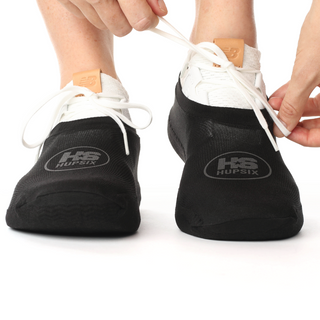
HupSix is a cardio workout that improves how you move using patented gear, bodyweight exercises, and audio cues to get you moving in sync to music that rocks. But it also does something else: it keeps you in the zones that matter for HRV development.
Each 30-minute class uses six guided rounds based on a learn → practice → full-out structure. That gives you repeated moments of elevated effort, followed by enough recovery to reset. It’s interval training without the impact or monotony.
This is why a 30-minute HupSix class consistently produces 40–50+ cardio-zone minutes when tracked with a chest-strap HR monitor. Vigorous minutes count double toward weekly heart-health goals, which is exactly what the CDC and Cooper Institute emphasize.
That pattern—effort + recovery—helps your heart adapt. When the heart adapts, HRV improves.
What You Should Feel
When HRV rises, you usually notice:
- You bounce back faster between rounds
- You recover faster between classes
- You feel calmer during the day
- Your workouts stop “flattening” you
It’s not magic. It’s the body responding to consistent, structured interval work.
The Bottom Line
HRV improves when your workouts give your heart a reason to adapt. That means intervals, not punishment. Structure, not chaos. And workouts that help you push and reset without beating your joints up.
If you want a training method that fits the science—and fits in your living room—HupSix delivers it in under 30 minutes.
Try HupSix free for 30 days and you’ll understand why people stick with it. One class in and you’ll wonder how you ever did cardio any other way.
References
Shaffer F, Ginsberg JP. An overview of heart rate variability metrics and norms. Front Public Health. 2017.
Hillebrand S, et al. Heart rate variability and first cardiovascular events in populations without known cardiovascular disease. Europace. 2013.
Tsuji H, et al. Reduced heart rate variability and mortality risk in an elderly cohort. Circulation. 1996.
Dekker JM, et al. Low heart rate variability in a 2-minute rhythm strip predicts risk of coronary heart disease and mortality. Circulation. 2000.
Helgerud J, et al. Aerobic high-intensity intervals improve VO₂max more than moderate training. Med Sci Sports Exerc. 2007.
Wisløff U, et al. Superior cardiovascular effect of aerobic interval training versus moderate continuous training in heart failure patients. Circulation. 2007.
Fujimoto N, et al. Effects of lifelong endurance training on left ventricular compliance and distensibility. Circulation. 2010.
Bhella PS, et al. Impact of lifelong exercise on left ventricular relaxation and diastolic function. JACC: Heart Failure. 2014.
Centers for Disease Control and Prevention. Physical Activity Guidelines for Adults.